
https://www.plymouthoctopus.org/belonginplymouth-details?recordId=rec6XuKcZqvN8WGbP for original article
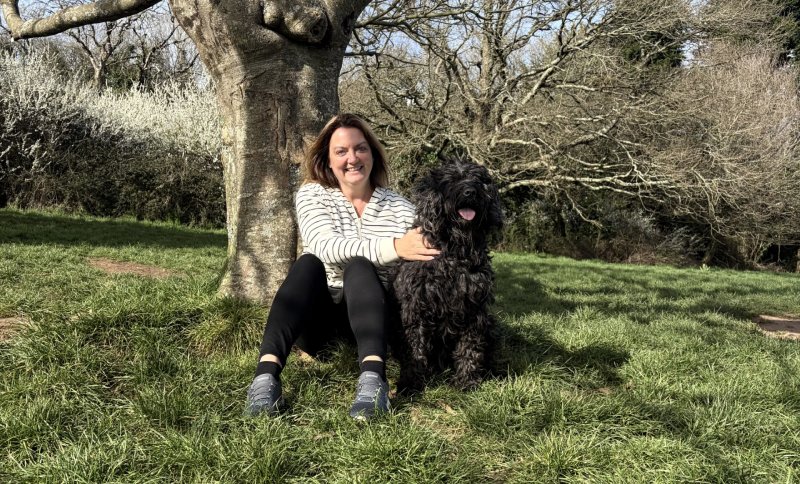
Sarah & Cheryl
Plymouth Pain Café
In 2023, Julie Widdecombe set up a series of Pain Cafes in Plymouth where people suffering from chronic pain would find support, advice and, crucially, understanding. Appreciating how they might better manage their pain themselves, sharing their ‘lived experience’ and led by a chronic pain coach, participants come to learn valuable life skills such as acceptance, mindfulness and the ability ‘to pace’ themselves alongside practical lessons involving, for example, medication, nutrition and insomnia. The impact for some of the participants has been nothing short of a revelation.
Sarah and Cheryl talk to Caroline Blackler about their experiences.
Sarah has spent almost her whole adult life in chronic pain and on medication. She was 20 years old and working at a call centre when she was diagnosed with repetitive strain injury in her arm/shoulder. Six years later and, with the pain having spread to most of her body, she was told she had fibromyalgia. Since then, she has endured years of chronic back pain, years of stabbing nerve pain and been incapacitated by vertigo for twelve months. Now 47 years old, Sarah, has been prescribed numerous variations of anti-inflammatories; anti-depressants and opioid-based painkillers throughout her entire adult life:
“I’ve spent 27 years trying loads of stuff”, she says. “I was 20 when they first gave me anti-depressants and I was literally sleeping 23 hours a day.”
Sarah had also spent many years trying to find a support group that ‘worked’ for her. Over the years she had tried several, including some specific to Fibromyalgia, but had often come away feeling they hadn’t quite ‘hit the mark’. What, she now admits she was searching for – having found the Pain Café about eighteen months ago – was a deeply felt need to be understood:
“I’d been to groups before,” she says, “but this group is encouraging; it’s more understanding and more positive.”
Meanwhile, super-fit Cheryl, previously working as a PT instructor, was regularly lifting ‘Olympic weights’ as part of her routine when she first became aware that something was wrong:
“I first noticed it about four years ago when my arms suddenly couldn’t hold up the weights on the bar anymore: my legs were buckling… my elbows, my wrists. It came on gradually, and then I got widespread nerve pain – in my legs, my arms, my face – and I was getting weaker and weaker and the pain was getting worse and worse. My left hip got so painful at times that I couldn’t stand.”
Cheryl was initially diagnosed with Occipital Neuralgia – a condition in which the nerves that run from the top of the spinal cord up through the scalp, called the occipital nerves, are inflamed or injured – and then, what Cheryl describes as the ‘catch-all’ term, Fibromyalgia. By the summer of 2025, Cheryl’s physical and mental health had both deteriorated. For someone who had been extraordinarily fit and extremely healthy she was now, she says, effectively ‘disabled’:
“For three months last summer I was in a mobility scooter. I had to wear a neck brace at times and if I stood for ten minutes it felt like my legs were going to explode.”
Unable to work, a single mum to a five-year old, Cheryl was also suffering from trauma following years of domestic abuse, Cheryl was in a very dark place: alone, scared and desperate:
“Pain, fear, dismissal and just feeling that I wasn’t getting any help from anyone in the NHS: that I didn’t have any support. I’d had enough. I knew that if I didn’t get out the door and do something for myself, I would probably have…”
Cheryl didn’t finish the sentence.
Sarah knows all too well the desperation Cheryl was feeling:
“I was feeling very low a few months ago. And then I nearly stepped into traffic… it was only because I was on my way to the pain café and knew I had somewhere to go that I didn’t do it.”
And she adds:
“I just don’t know how the medical profession could let me get to that point.”
Fortuitously, it was at this time – when Cheryl was at her lowest – that she heard about the Pain Café. Something resonated and, determined, she forced herself to go along:
“I walked in on crutches. I could barely move… I was in agony and really really nervous. I was like a shell of a human, a shadow.”
But she also recalls what happened next:
“There were about five or six other people there and … I just listened and it was like a lightbulb moment, and I remember thinking that other people were feeling like the way I am. And I just didn’t feel so alone.”
And one of those people in the room was Sarah. It was the start of a beautiful friendship:
“It’s changed my life,” says Cheryl, adding “I’ve found my people, empathetic people, who genuinely care about you. I haven’t found genuine people like this anywhere ever.”
Both Sarah and Cheryl have found the pain cafes life-changing. As well as finding each other, both women have learnt ways to better manage their pain; to better look after themselves and, significantly, says Sarah – after more than twenty-five years of medication – they have learnt crucial information about the drugs:
“One of the main things about the course [for me] was learning that the effectiveness of drugs wears off,” she says recalling the years and years of GP appointments, referrals, prescriptions, repeat prescriptions, different drugs, higher doses. “Nobody had told me that.”
Both women reflect on their individual experience of trying to navigate the health system; of the many years trying to understand what was wrong with each of them, trying to get an accurate diagnosis and trying to get the pain to stop. Cheryl is particularly scathing of the inherent misogyny, she says she has repeatedly experienced, within the medical profession:
“For women, the first thing they go to whenever they see it’s a woman with chronic pain or exhaustion or unexplained symptoms, is ‘it’s either hormones or depression’ and that’s how they treat it.
“And all the research and the testing that’s been done for these drugs, has been done on men’s bodies.”
And then they tell me about the side effects of some of their prescribed medication; of the additional afflictions; the pain and the devastation:
“I spent more than a year in bed suffering from vertigo”, says Sarah adding that she has – repeatedly – experienced a lack of consideration from those prescribing the drugs, as to their efficacy:
“They leave you on these drugs for so long and nobody reviews you.”
And in Cheryl’s case, there was a plethora of conditions, she believes, were inadvertently caused by the medication she was prescribed:
“I’ve had headaches; nausea; diarrhoea; severe cramping in my stomach … it’s affected my balance and I was losing my hair.”
And this is one of the reasons why both Sarah and Cheryl find the Pain Cafes invaluable: the ability of being able to meet others living with chronic pain; to share their individual experiences; to hear about the effects the drugs might be having on others and to learn what they can do. Because, as the heart of the pain cafes ethos, is the determination that individuals manage their pain themselves. Education. Empathy. Empowerment.
Sarah looks back at all those years on medication with a sense that she had “missed some of my life”. With the support of Julie, Cheryl and her peers at the pain café she has been without medication since January. Still in pain, she is managing it, she says, through the use of heat-application and learning how to better ‘pace’ herself. Meanwhile, Cheryl despairs at getting appropriate support from the NHS, not least, because of the seeming inefficiency and incoherent system:
“I’m still under nine different departments. It’s madness,” she says, “and they don’t talk to each other.”
Neither Sarah nor Cheryl can understand why there isn’t better promotion of the Pain Cafes. At no point, they tell me, were either of them signposted by anyone in ‘the medical profession’: no doctor, no consultant, no physiotherapist. Cheryl says she heard about it from a ‘social prescriber’ and Sarah picked up a leaflet at the food larder in Plympton where she volunteers. She can’t, she says, understand it:
“Why are they not telling people about the pain cafes?”
